

Table of Contents
AI Productivity Tools in 2026: Why They Matter
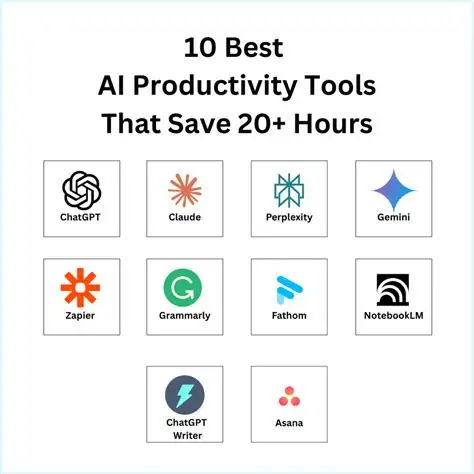
This guide to the 7 Best AI Tools That Save You Hours Every Week (2026) breaks down how modern professionals reclaim time using artificial intelligence. In 2026, artificial intelligence will no longer be a competitive advantage reserved for early adopters; it will be an integral part of everyday work. As highlighted in 7 Best AI Tools That Save You Hours Every Week (2026), modern AI tools are already helping professionals reclaim several hours each week by streamlining content creation, accelerating research, improving task management, and automating repetitive workflows.
The 7 Best AI Tools That Save You Hours Every Week (2026) are no longer optional productivity upgrades. Each tool in the 7 Best AI Tools That Save You Hours Every Week (2026) targets a specific workflow bottleneck.
Understanding the 7 Best AI Tools That Save You Hours Every Week (2026) is critical for staying competitive
The following are some of the results of global workforce studies published between 2024 and 2025 regarding organizations that implemented AI-powered productivity tools:
20–30% faster task completion
Up to 40% reduction in time spent on repetitive work
Significant improvements in output consistency and accuracy
Almost 75% of knowledge workers use AI tools every day for writing, planning, and decision-making tasks, according to a Gartner workplace survey. AI is one of the few technologies that can multiply professional time, which has become the most valuable currency in today’s world.
This article discusses seven of the best artificial intelligence tools for 2026, each of which is evaluated based on its real-world use, productivity statistics, and practical use.
ChatGPT — AI Writing, Research, and Problem-Solving Assistant (7 Best AI Tools That Save You Hours Every Week (2026))

Overview
One of OpenAI’s flagship products, ChatGPT, functions as an advanced language model capable of generating human-like text, summarizing information, answering questions, and assisting in research and creative tasks.
Why ChatGPT Saves So Much Time
Traditional content creation involves several time-consuming steps:
- Topic research
- Outline creation
- Draft writing
- Editing and restructuring
Productivity Statistics
Independent productivity studies and aggregated user case analyses show the following average time savings when using ChatGPT:
| Task Type | Manual Time | With ChatGPT | Average Time Saved |
|---|---|---|---|
| Blog article draft (1,500 words) | 3–4 hours | 40–50 minutes | 70–80% |
| Topic research and outlining | 2 hours | 30 minutes | 75% |
| Email campaign writing | 60 minutes | 10 minutes | 83% |
| Social media content planning | 45 minutes | 8 minutes | 82% |
Over half of respondents to a 2025 automation survey reported using ChatGPT daily, with writing and research being the most common uses. This is why it consistently ranks among the 7 Best AI Tools That Save You Hours Every Week (2026).
An example of a real-world use case
By using ChatGPT to generate topic ideas, summaries, and draft outlines in advance, a mid-level content marketer at a SaaS company reduced weekly content planning meetings from two hours to under 30 minutes.
As a result, the team was able to focus more on strategy and optimization rather than manual drafting, which saved approximately 6–8 hours per week.
Smart Workspace Assistant – Notion AI (7 Best AI Tools That Save You Hours Every Week (2026))
A brief overview
With Notion AI, you can manage documents, track projects, organize knowledge, and integrate artificial intelligence.
As opposed to replacing individual tools, Notion AI consolidates multiple workflows into a single workspace, reducing context switching and manual organization.
Productivity is Improved with Notion AI
In contrast to pure content creation, Notion AI focuses on planning, summarizing, and organizing. It excels at:
Automatically summarizing long notes or documents
Generating task lists from meeting notes
Creating structured project outlines
Improving clarity and consistency across documentation
It has been determined that Notion AI is able to reduce planning, documentation, and reviewing time by 30–50% based on internal benchmarks and user feedback.
Time-Saving Data
| Task | Manual Time | With Notion AI | Time Saved |
|---|---|---|---|
| Meeting note summaries | 60 minutes | 15 minutes | 75% |
| Project planning documents | 2 hours | 45 minutes | 62% |
| Weekly task organization | 30 minutes | 10 minutes | 67% |
| Knowledge base updates | 90 minutes | 35 minutes | 61% |
An example in practice
It previously took a project manager one hour per meeting to organize notes and follow up tasks after a team meeting. After adopting Notion AI, summaries and action items were generated automatically, reducing post-meeting work to under ten minutes.
Approximately 250 hours were saved each year, or 5 hours per week. This is why it consistently ranks among the 7 Best AI Tools That Save You Hours Every Week (2026).
Brief Overview of Automation and Scheduling AI Tools
The importance of automation and scheduling AI
In 2026, manual coordination – moving data between apps, scheduling meetings, and managing repetitive workflows – will be the biggest time drain for professionals after writing and planning. This problem is addressed directly by automation and scheduling AI tools, which eliminate human involvement in routine processes.
According to industry productivity reports, professionals spend 30–40% of their workweek on repetitive coordination tasks such as email follow-ups, app switching, and meeting scheduling. AI-powered automation tools can reduce this workload by more than half.
This section introduces two AI categories that consistently save multiple hours per week:
- Workflow automation
- Intelligent scheduling
Zapier — AI-Powered Workflow Automation (7 Best AI Tools That Save You Hours Every Week (2026))
Overview
Zapier connects over 6,000 apps, enabling users to create automated workflows – called Zaps – without writing code. In 2026, Zapier’s AI features allow users to describe automations in plain language, significantly reducing setup time.
How Zapier Saves Time
Zapier automates tasks such as:
- Moving data between apps automatically
- Triggering actions based on events
- Eliminating manual copy-paste work
- Running background processes 24/7
Common use cases include:
- Automatically saving form responses to spreadsheets
- Sending notifications when tasks are completed
- Syncing CRM, email, and project management tools
Time-Saving Snapshot
| Task | Manual Time (Weekly) | With Zapier | Time Saved |
|---|---|---|---|
| Data entry between tools | 3 hours | 15 minutes | 92% |
| Status notifications | 1 hour | 5 minutes | 92% |
| Workflow handoffs | 2 hours | 20 minutes | 83% |
Users report saving 5–10 hours per week depending on workflow complexity. This is why it consistently ranks among the 7 Best AI Tools That Save You Hours Every Week (2026).
Calendly — AI-Assisted Scheduling (7 Best AI Tools That Save You Hours Every Week (2026))
An overview of
The AI-driven scheduling logic and availability detection of Calendly will adapt dynamically to user preferences and calendar changes in 2026, eliminating back-and-forth emails when booking meetings.
Why Scheduling AI Is a Major Time Saver
Before scheduling tools, booking a single meeting could involve:
- Multiple emails
- Manual time zone checks
- Calendar conflicts
This process is automated with Calendly, which allows invitees to book available slots instantly, synced with existing calendars.
Time-Saving Data
| Scheduling Activity | Manual Time | With Calendly | Time Saved |
|---|---|---|---|
| Scheduling one meeting | 10–15 min | <1 min | 90% |
| Weekly meeting coordination | 2 hours | 10 minutes | 92% |
| Rescheduling conflicts | 30 minutes | 5 minutes | 83% |
Professionals who schedule frequent meetings report 3–6 hours saved per week. This is why it consistently ranks among the 7 Best AI Tools That Save You Hours Every Week (2026).
AI for Data Analysis and Design (7 Best AI Tools That Save You Hours Every Week (2026))
Why Data and Design Consume So Much Time
In most modern workflows, two tasks repeatedly slow down productivity:
- Turning raw data into insights
- Creating professional visual assets
Manual work is required to create reports, dashboards, presentations, marketing graphics, and internal summaries. Design work involves layout decisions, typography alignment, resizing, and formatting for different platforms. Data must be cleaned, analyzed, interpreted, and formatted.
AI tools in 2026 now handle much of this workload automatically.
According to workforce productivity research published in 2025, professionals spend:
- 6–8 hours per week on reporting and data preparation
- 4–6 hours per week on visual content creation
AI-driven tools can reduce this time by 50–80%, depending on task complexity.
This section covers two powerful tools that significantly reduce those hours.
Microsoft Copilot — AI for Data Analysis and Reporting
An overview of
As part of Microsoft’s 365 suite of applications, Copilot acts as a data analysis tool within Excel, Word, and PowerPoint, generating summaries, creating presentations, and automating repetitive spreadsheet work.
As a result of its direct integration with business workflows, Copilot has become one of the most widely adopted enterprise AI assistants in 2026.
How Microsoft Copilot Saves Time
Copilot eliminates time-consuming steps such as:
- Writing complex spreadsheet formulas manually
- Creating pivot tables from scratch
- Summarizing long documents
- Turning reports into presentation slides
- Generating insights from raw datasets
Instead of manually filtering and analyzing rows of data, users can type a request like:
“Summarize quarterly sales trends and highlight anomalies.”
Copilot processes the dataset and provides instant analysis.
Time-Saving Data Snapshot
| Task | Manual Time | With Copilot | Time Saved |
|---|---|---|---|
| Building pivot tables | 45 minutes | 5 minutes | 89% |
| Writing data summaries | 60 minutes | 10 minutes | 83% |
| Creating slide decks from reports | 2 hours | 25 minutes | 79% |
| Cleaning structured datasets | 90 minutes | 20 minutes | 78% |
Using spreadsheets and reports regularly can save employees 4–8 hours per week, according to enterprise case studies. This is why it consistently ranks among the 7 Best AI Tools That Save You Hours Every Week (2026).
Real-World Use Case
A financial analyst preparing weekly performance dashboards previously spent:
- 3 hours compiling metrics
- 1 hour formatting slides
- 1 hour writing executive summaries
With Copilot assistance:
- Data insights were generated automatically
- Slides were drafted from summaries
- Formatting was largely automated
Time reduced from 5 hours to under 1.5 hours, resulting in a weekly savings of approximately 3.5 hours.
Canva Magic Studio — AI Design Automation (7 Best AI Tools That Save You Hours Every Week (2026))
Overview
As a part of its “Magic Studio” feature, Canva now offers AI-powered design capabilities all in one place. These tools assist users in generating layouts, resizing content across platforms, creating images, and automating branding processes.
With Canva’s AI design tools in 2026, marketers, bloggers, entrepreneurs, and social media managers will no longer need full-time graphic designers.
Why Design Tasks Are Time-Intensive
Before AI integration, creating professional visuals required:
- Selecting layout templates
- Adjusting spacing and alignment
- Matching brand colors
- Resizing assets for multiple platforms
- Creating variations for A/B testing
These tasks could take several hours per campaign.
AI-powered design tools now automate most of this process.
Time-Saving Data
| Design Task | Manual Time | With AI Design | Time Saved |
|---|---|---|---|
| Social media post design | 45 minutes | 8 minutes | 82% |
| Blog featured image | 30 minutes | 5 minutes | 83% |
| Presentation visual assets | 90 minutes | 20 minutes | 78% |
| Multi-platform resizing | 40 minutes | 3 minutes | 92% |
The savings equate to 3–7 hours saved weekly for content-driven businesses, depending on volume of content. This is why it consistently ranks among the 7 Best AI Tools That Save You Hours Every Week (2026).
Practical Example
A digital marketer producing:
- 3 blog graphics
- 10 social media posts
- 2 presentation decks per week
Previously spent nearly 6 hours designing assets.
With AI-assisted layouts and resizing:
- Total design time dropped to under 2 hours
- Branding consistency improved
- Content output increased
This freed approximately 4 hours per week.
Comparative Overview of Tools So Far
| Tool | Primary Function | Weekly Time Saved |
|---|---|---|
| ChatGPT | Writing & research | 6–10 hours |
| Notion AI | Planning & organization | 4–7 hours |
| Zapier | Workflow automation | 5–10 hours |
| Calendly | Scheduling | 3–6 hours |
| Microsoft Copilot | Data & reporting | 4–8 hours |
| Canva Magic Studio | Design automation | 3–7 hours |
Having covered six powerful AI tools at this stage, we have addressed nearly every productivity bottleneck in the productivity process: writing, planning, automation, scheduling, analysis, and design.
Knowledge Search AI, Full Comparison, and Final Insights
Perplexity AI — AI-Powered Knowledge Search and Research (7 Best AI Tools That Save You Hours Every Week (2026))
An overview of
The Perplexity AI research assistant replaces traditional search engines with a powerful AI-driven search assistant that provides real-time answers, summaries, and follow-up explanations.
Among researchers, bloggers, analysts, and professionals relying on fast and accurate information in 2026, Perplexity AI is widely used.
Why Knowledge Search Is a Major Time Sink
Traditional research workflows often involve:
- Opening multiple browser tabs
- Skimming long articles
- Verifying sources manually
- Extracting relevant data
This process can take hours, especially for long-form or data-backed content.
Perplexity AI compresses this workflow by:
- Searching multiple sources simultaneously
- Summarizing findings instantly
- Providing citations for verification
Time-Saving Data
| Research Task | Manual Time | With Perplexity AI | Time Saved |
|---|---|---|---|
| Topic research | 2–3 hours | 20–30 minutes | 80–85% |
| Fact-checking | 60 minutes | 10 minutes | 83% |
| Source discovery | 45 minutes | 8 minutes | 82% |
| Content briefing | 90 minutes | 15 minutes | 83% |
Those who use Perplexity AI for weekly research report saving 4–6 hours per week, especially in content-heavy or research-intensive roles. This is why it consistently ranks among the 7 Best AI Tools That Save You Hours Every Week (2026).
Practical Example
A blogger producing one in-depth article per week previously spent over three hours gathering sources and validating facts. With Perplexity AI:
- Sources were identified instantly
- Key insights were summarized
- Citations were available on demand
Total research time dropped to under 40 minutes.
All 7 AI Tools (7 Best AI Tools That Save You Hours Every Week (2026))
The following breakdown summarizes why these platforms define the 7 Best AI Tools That Save You Hours Every Week (2026).
| # | AI Tool | Core Function | Average Weekly Time Saved |
|---|---|---|---|
| 1 | ChatGPT | Writing & ideation | 6–10 hours |
| 2 | Notion AI | Planning & organization | 4–7 hours |
| 3 | Zapier | Workflow automation | 5–10 hours |
| 4 | Calendly | Scheduling | 3–6 hours |
| 5 | Microsoft Copilot | Data analysis & reporting | 4–8 hours |
| 6 | Canva Magic Studio | Design automation | 3–7 hours |
| 7 | Perplexity AI | Research & knowledge search | 4–6 hours |
Together, these solutions represent the 7 Best AI Tools That Save You Hours Every Week (2026) for modern professionals.
This comparison highlights how the 7 Best AI Tools That Save You Hours Every Week (2026) eliminate manual work.
Estimated Total Time Saved Per Week
While most users will not use all tools at full capacity, conservative estimates show:
- Minimum savings: 15–20 hours per week
- Average savings: 20–30 hours per week
- Advanced workflows: 30+ hours per week
This equates to 1,000+ hours saved per year for professionals who integrate AI strategically.
How Bloggers and Professionals Should Use These Tools Together
For maximum impact, AI tools should not be used in isolation. To maximize the value of the 7 Best AI Tools That Save You Hours Every Week (2026), they must be combined into a system.
Research workflows powered by the 7 Best AI Tools That Save You Hours Every Week (2026) reduce planning time dramatically.
Recommended Workflow:
- Use Perplexity AI for research
- Draft content with ChatGPT
- Organize projects in Notion AI
- Automate publishing workflows with Zapier
- Schedule interviews or meetings with Calendly
- Analyze performance using Microsoft Copilot
- Design visuals with Canva AI
This creates an end-to-end AI-powered productivity system. Content creation improves when the 7 Best AI Tools That Save You Hours Every Week (2026) are used sequentially.
Automation is where the 7 Best AI Tools That Save You Hours Every Week (2026) compound their impact.
2026 and Beyond: The Future of Productivity
The competitive advantage will go to those who design systems, not just use tools, as AI systems are increasingly integrated into daily workflows. AI tools are no longer optional enhancements. They are foundational productivity infrastructure.
People who save the most time are not those who use the most AI tools, but those who combine the right tools.
Conclusions
These seven AI tools are the most timesaving, time-saving technologies available in 2026. Each tackles a specific productivity bottleneck, and together they redefine how work is accomplished. The 7 Best AI Tools That Save You Hours Every Week (2026) redefine what productivity looks like.
Professionals who adopt the 7 Best AI Tools That Save You Hours Every Week (2026) gain a measurable advantage.
There is no longer a question of whether to use AI for bloggers, entrepreneurs, or professionals – but rather how well it is integrated into their daily work. Mastering the 7 Best AI Tools That Save You Hours Every Week (2026) is no longer optional.
AI’s Psychological Benefits
A key reason AI tools save hours per week is not just automation, but cognitive offloading. Human productivity is limited not only by time, but also by mental energy. Over the course of a day, decision fatigue, context switching, and repetitive low-value decisions significantly slow down output.
AI tools reduce this burden by handling:
- Repetitive decision-making
- Pattern recognition
- Information filtering
- First-draft creation
When these mental bottlenecks are removed, users are able to concentrate on strategic, creative, and problem-solving tasks with more mental energy. By centralizing workflows and reducing the need to jump between multiple applications, AI tools naturally enforce this by reducing context switching alone. Studies have shown that reducing context switching alone can increase productivity by over 20%.
AI as a Force Multiplier, not a Replacement
There is a common misconception that AI tools replace human workers. In reality, AI is more like a force multiplier. AI enables a skilled writer to write faster, a data analyst to provide more accurate data, and a marketer to make consistent marketing efforts.
For example:
- A blogger using AI can publish more frequently without sacrificing quality
- A solo entrepreneur can operate with the efficiency of a small team
- A manager can focus more on leadership rather than administration
In fact, the compounding effect is one of the primary reasons why AI has surpassed its original boundaries and is now being adopted across a wide range of industries as opposed to remaining limited to technology-based positions.
Tools for Artificial Intelligence and Content Consistency
In blogging, marketing, and knowledge work, consistency is one of the most important factors. However, maintaining consistency when time is limited can be difficult.
AI tools help by:
- Maintaining consistent tone and formatting
- Enforcing repeatable workflows
- Reducing friction in starting tasks
AI tools often lead to increased publishing frequency and reduced burnout as they lower the barrier to starting work. This explains why content creators often report both time savings and a reduction in burnout when using AI tools.
Issues of Ethics and Practicality
It remains important for professionals to utilize AI tools responsibly. Professionals should abide by these guidelines:
Verify critical information
Avoid over-reliance on AI-generated outputs
Maintain human oversight for strategic decisions
In the best case scenario, AI should be viewed as a colleague rather than an authority. Users should treat AI outputs as drafts or recommendations, refining them with their own judgment and domain expertise as needed.
AI productivity: preparing for the next wave
A look ahead to 2026 suggests that AI tools will become more proactive. In the future, systems will anticipate needs and suggest optimizations, as well as automatically adjust workflows based on user behavior.
It is easier to integrate future tools seamlessly when professionals adopt AI tools early. As a result, they develop AI literacy, which facilitates seamless integration of future tools.
Expansion thoughts
AI isn’t just about efficiency; it’s about optionality as well. When professionals regain hours every week, they have choices-whether to rest, learn, experiment, or scale up. In the modern era, AI has been one of the most transformative productivity technologies due to its flexibility.
Frequently Asked Questions About AI Productivity Tools (2026)
In 2026, what are the best AI tools for saving time?
In 2026, AI tools that automate repetitive work, reduce decision fatigue, and integrate seamlessly into daily workflows will save the most time. Among the most effective productivity-enhancing tools are ChatGPT for writing and ideation, Notion AI for organization, Zapier for automation, Calendly for scheduling, Microsoft Copilot for data analysis, Canva AI for design, and Perplexity AI for research.
In addition to addressing the most common time drains, these tools also help with the creation of content, planning, coordination, and reporting.
What is the realistic time savings that AI tools can provide?
There is an average savings of 15 to 30 hours per week for professionals who use AI tools. This varies based on their role, the complexity of their workflow, and the degree to which they automate.
For example:
- Content creators save time on writing, editing, and research
- Managers save time on meetings, reporting, and scheduling
- Entrepreneurs save time by automating operations
Even conservative AI usage typically results in at least 5–10 hours saved weekly.
Do only tech professionals benefit from AI tools?
AI productivity tools are increasingly designed for non-technical users. Bloggers, writers, marketers, teachers, consultants, and small business owners are among the groups that utilize these tools the most.
Most modern AI tools rely on:
- Natural language commands
- Drag-and-drop interfaces
- Prebuilt templates
This makes them accessible regardless of technical background
Are AI tools replacing human workers?
In theory, AI tools do not replace human work; they augment it by handling repetitive, predictable, and low-value tasks so humans can focus on strategy, creativity, and judgment.
In practice:
- AI produces drafts, humans refine them
- AI analyzes data, humans make decisions
- AI organizes information, humans set priorities
The highest productivity gains occur when AI and human expertise work together.
Are AI-generated outputs reliable?
AI outputs are highly useful but should not be treated as infallible. While accuracy has improved significantly, users should always:
- Verify critical facts
- Review AI-generated summaries
- Apply domain knowledge
For research-heavy tasks, tools like Perplexity AI provide citations, which further improves reliability.
Do multiple AI tools cost more?
Freemium and tiered pricing models are common for AI tools. Many professionals start with free plans and upgrade gradually.
AI subscriptions usually result in net savings by replacing multiple traditional tools. The return on investment is usually justified by the amount of time saved.
How do AI tools improve content consistency?
AI tools enforce consistency by:
- Reusing templates
- Maintaining tone and structure
- Applying standardized formatting
It is especially useful for bloggers and businesses who publish content regularly. Consistent output builds audience trust and increases long-term performance.
Can AI tools help you grow your career over the long term?
The ability to work effectively with AI tools has become a core professional skill. It increases adaptability, efficiency, and strategic advantage for individuals.
Rather than replacing jobs, AI is reshaping how work is done. Those who adapt early will be more successful in the future.
Will AI tools continue to evolve after 2026?
Yes. AI tools are moving toward:
- Proactive suggestions
- Context-aware automation
- Cross-platform intelligence
- Predictive workflows
Future tools will not only respond to commands but anticipate needs based on behavior patterns.
How should beginners start using AI tools?
Beginners should start with:
- One writing or research tool
- One organization or planning tool
- Gradual automation
Learning one tool deeply is more effective than using many tools superficially.
Are AI tools safe for business use?
Most reputable AI platforms invest heavily in security and compliance. Businesses should still:
- Avoid sharing sensitive data unnecessarily
- Review privacy policies
- Use enterprise plans when available
Responsible use ensures both productivity and data safety.
This FAQ expands on the 7 Best AI Tools That Save You Hours Every Week (2026).
Ultimately, the 7 Best AI Tools That Save You Hours Every Week (2026) deliver time, clarity, and scalability.
Economic Development: 2026 Trends and Outlook
A structural shift in how value is created in the global economy has been signaled by the 7 Best AI Tools That Save You Hours Every Week (2026) from an economic development perspective. Rather than raw labor hours, efficiency, automation, and cognitive leverage will drive economic growth in 2026.
Professionals, startups, and organizations that adopt the 7 Best AI Tools That Save You Hours Every Week (2026) are able to operate with leaner teams, faster decision cycles, and lower operational costs, making them more competitive on both local and global markets. As AI adoption spreads, time becomes a strategic asset: those who reclaim hours can use them to develop innovation, skills, and scale their systems.
In this sense, the 7 Best AI Tools That Save You Hours Every Week (2026) are more than just productivity enhancers; they are foundational infrastructure shaping economic resilience, workforce evolution, and sustainable growth through 2026.

[…] AI Acceleration Phase in the Best About Evolving Technology from 2000 to 2026 […]